 how-to
How Do You Build a Salary Audit Trail That Holds Up?
Last Updated: 13 November 2026
Quick Summary
To build a salary audit trail, log every pay change with before-and-after values, a written change reason, the named authoriser and timestamped supporting evidence, then lock the record so it cannot be rewritten. Attach benchmarking data, signed approval forms and the relevant enterprise agreement clause, since evidence is the step most teams skip.
- Define a change to cover base rate, allowances, loadings, superannuation, classification level and effective dates.
- Record the effective date separately from the processing date in every entry.
- Benchmark first, documenting the data source, date, roles matched and any location or roster adjustments.
- Approve in sequence through manager, HR and finance, with each approval timestamped and recorded.
- Log corrections and reversals rather than deleting them, and retain records securely.
Table of Contents
- Building a Payroll Change Audit Trail Step by Step
- Your Payroll Audit Trail Checklist
- Salary Review Approval Process and Benchmarking Method
- Frequently Asked Questions
Building a Payroll Change Audit Trail Step by Step
A salary audit trail is a chronological record of every change to an employee's pay, who made it, when, and why. Organisations often treat this as paperwork, but it is the difference between a pay decision you can defend and one you cannot.
- Define what counts as a change. Base rate, allowances, loadings, superannuation, classification level, and effective dates.
- Log before-and-after values. A single "new salary" field tells an auditor nothing.
- Capture the change reason and link it to supporting evidence.
- Record the authoriser, name, approval date, and sign-off evidence.
- Attach supporting evidence: benchmarking data, signed approval forms, and the relevant enterprise agreement clause.
- Timestamp every entry so the log is chronological and tamper-evident.
- Lock the record so the trail cannot be rewritten.

The step most teams skip is step five. Without evidence behind the number, the trail records a decision but cannot justify it.
Your Payroll Audit Trail Checklist
A payroll audit trail checklist is the practical test of whether your records would satisfy an auditor. Work through it before any review, not after.
- Every salary change has a named requester and approver
- Before-and-after values and a written change reason are recorded
- The effective date is separate from the processing date
- Benchmarking or approval evidence is attached
- User permissions restrict who can edit pay data
- Segregation of duties separates requester from approver
- Pay run history reconciles to approved changes
- Corrections and reversals are logged, not deleted
- Records are retained and backed up securely
Watch out: the most common failure is a change approved verbally and entered later with no evidence attached. The number is right, the trail is broken.
Salary Review Approval Process and Benchmarking Method
The salary review approval process is where a salary audit trail earns its keep. An annual review generates dozens of changes at once, and a loose approval chain makes the whole cycle hard to defend.
Build the process in this order:
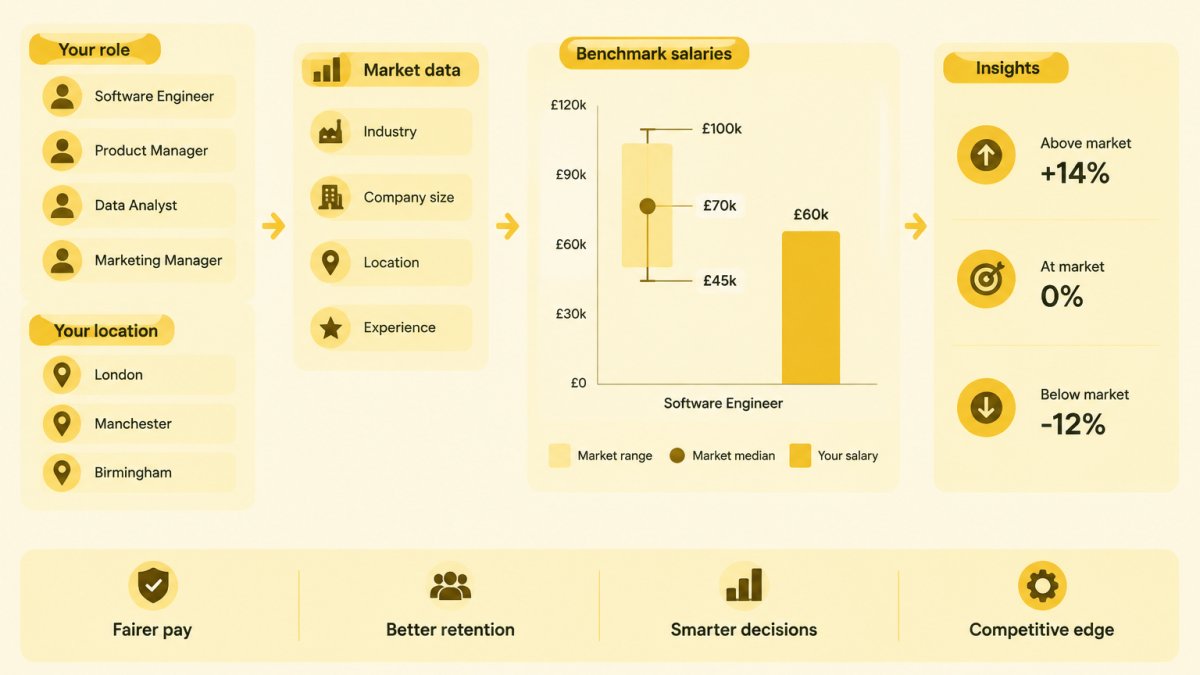
- Benchmark first. Establish the market rate for each role before any number is proposed. Use Fair Work Ombudsman guidance on pay and entitlements to confirm minimum obligations, then layer market data on top.
- Document the methodology. State the data source, the date of the data, the roles matched, and any adjustments for location or roster.
- Propose with evidence. Each recommendation carries its benchmark reference and a written rationale.
- Approve in sequence. Manager, then HR, then finance. Each approval is timestamped and recorded.
- Process and reconcile. The pay run must reconcile back to the approved changes.
The benchmarking method is the weak link in most audit trails. A defensible approach records the source, the sample, and the date.
| Stage | Record Required | Who Owns It |
|---|---|---|
| Benchmark | Source, date, roles matched | Compensation analyst |
| Proposal | Rationale and benchmark reference | HR business partner |
| Approval | Approver name, date, sign-off | Manager and HR |
| Processing | Pay run reference and reconciliation | Payroll |
| Review | Exception report and corrections | Finance |
Salary data is personal information. Restrict who can view and edit pay records, and retain the evidence for the period your obligations require.
Pay decisions get challenged. The organisations that handle those challenges well are the ones with evidence already in place. RateIndex gives you evidence-led market rate intelligence, private rate benchmarking, and the ability to import your own data, so every salary change sits on a defensible foundation. Get started with RateIndex and build a salary audit trail that holds up.
Frequently Asked Questions
What records should a salary audit trail include?
Each salary audit trail entry should record the employee and role, the before-and-after pay rate, the effective date, the reason for the change, and the name of the person who made it. Add the approver, the approval date, and the supporting evidence, such as a market benchmark report or a signed review form. Payroll transactions and pay-run history should link back to the same entry so finance can trace a payment to the decision behind it.
How is a payroll audit trail different from a salary audit trail?
A payroll audit trail logs what the payroll system did: transactions, pay runs, corrections, reversals and who processed them. A salary audit trail is narrower and sits upstream, recording why a person's pay rate changed, who approved it and what evidence supported it. A complete payroll change audit trail connects the two, so an auditor can follow a pay rate change through approval and into the payment record without gaps.
How can market benchmarking support a defensible salary decision?
Benchmarking gives a pay decision an external reference point. A sound salary benchmarking methodology matches roles by duties and scope, uses recent data, and documents the source and date of every figure. When a salary review approval process cites that benchmark alongside internal equity checks, the decision becomes evidence rather than opinion. RateIndex provides evidence-led market rate intelligence to help build a defensible audit trail behind each pay rate.